Both stays are land-based at comfortable, well-kept guesthouses on inhabited local islands. Breakfast is included, and for lunch and dinner you’re free to choose from the local restaurants. Your Bangalore Scuba dive pro will be with you throughout.
Overview
This is an 8-day, 7-night trip across two destinations. The first half is 3 days of diving in Addu Atoll (Seenu Atoll) – a mix of big-animal encounters, wreck diving, and reef dives on some of the healthiest hard coral in the southern Maldives. The second half moves to Fuvahmulah, a single oceanic island roughly an hour away by speedboat, which has become one of the most talked-about shark diving destinations in the world.
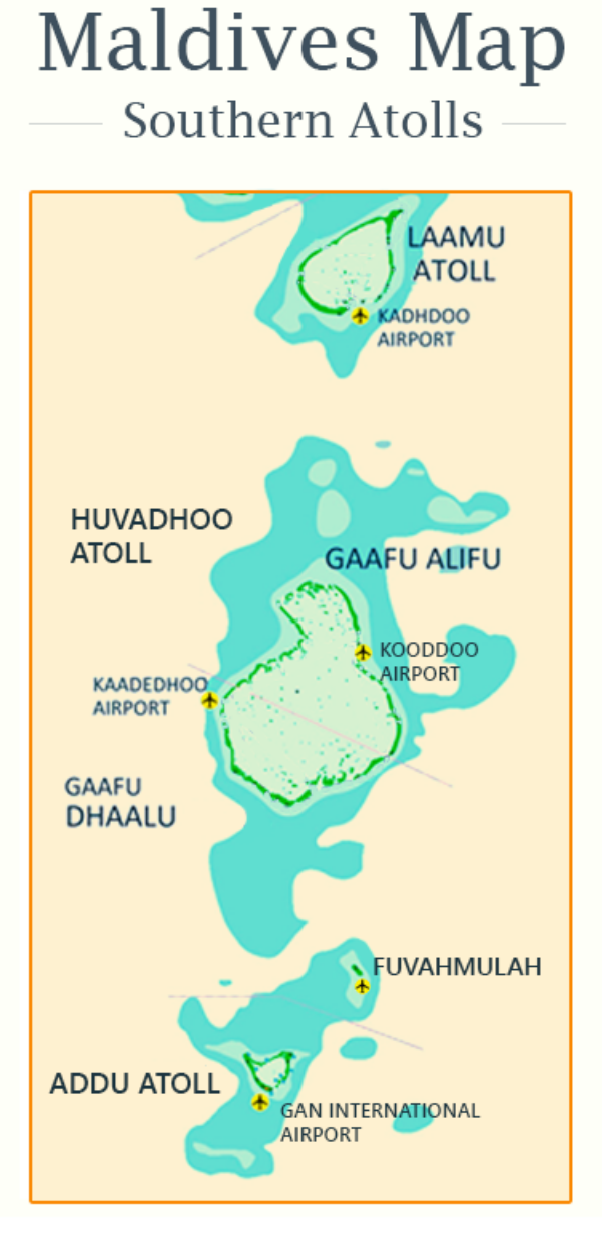
April is an excellent month for both. In Addu, January to April is the flat-water season – conditions are calm and settled, visibility is typically very good, and mantas are reliably present at the cleaning station year-round. In Fuvahmulah, April sits right in the peak window for whale sharks (January to May) and oceanic mantas (March to May), and the tail end of the hammerhead season (October to April). Tiger sharks and thresher sharks are present at Fuvahmulah year-round with no seasonality.
Both locations are on inhabited local islands, which means real Maldivian life rather than a resort bubble. The guesthouses are comfortable, clean, and spacious with reliable AC and hot water. Breakfast is included at both.
Itinerary
Diving Info
Addu Atoll
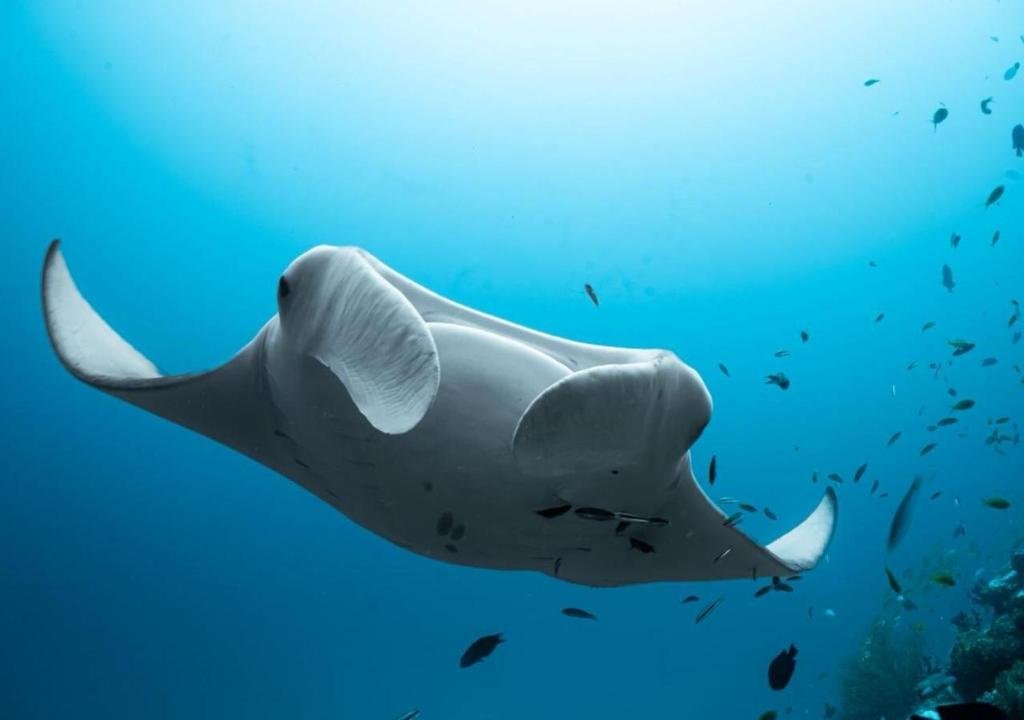
Manta Point (Maa Kandu): One of only a handful of year-round manta ray cleaning stations in the Maldives. Reef mantas congregate at 17 to 20 metres inside the northern channel, hovering over the cleaning station while small wrasse remove parasites. Both black and white morphs are seen here. April is still in the prime manta season window, and encounter rates at Maa Kandu are consistently good year-round. Grey reef sharks, eagle rays, and large schools of snapper are regular on this dive.
The British Loyalty: The largest wreck in the Maldives. This 140-metre WWII oil tanker was torpedoed by a German submarine in 1944, patched up, and eventually scuttled by the Royal Navy in 1946 inside Addu Lagoon. It now rests on its port side at 18 to 33 metres, inside the atoll with no current, fully encrusted with soft corals, sponges, and marine growth. Large morays, lionfish, batfish, and schools of reef fish throughout. At 140 metres long it takes multiple dives to explore properly.

Shark Point: A sandy plateau – A jillion grey reef sharks rest and circle the here – an unusually relaxed encounter because the sharks are entirely unbothered by divers. One of those dives that stays with you precisely because it isn’t rushed.

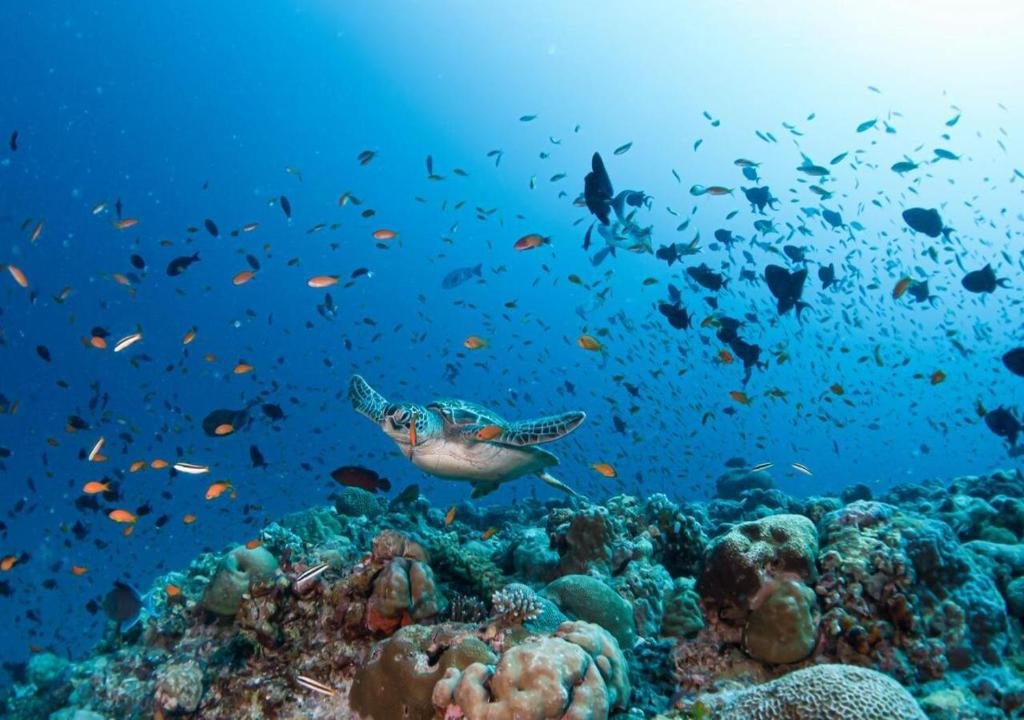
The Reefs: Addu’s outer reef slopes and inner walls have recovered well from coral bleaching events, with strong hard coral gardens and good fish diversity. Good for a change of pace from the big-animal dives.
Conditions in April: April is in Addu’s flat-water season (January to April). Conditions are generally calm, visibility 20 to 30 metres, water temperature around 28 to 30°C. A 3mm wetsuit is sufficient for most divers. Currents in the channels can be moderate to strong – Manta Point dives are timed for optimal current conditions.
Fuvahmulah
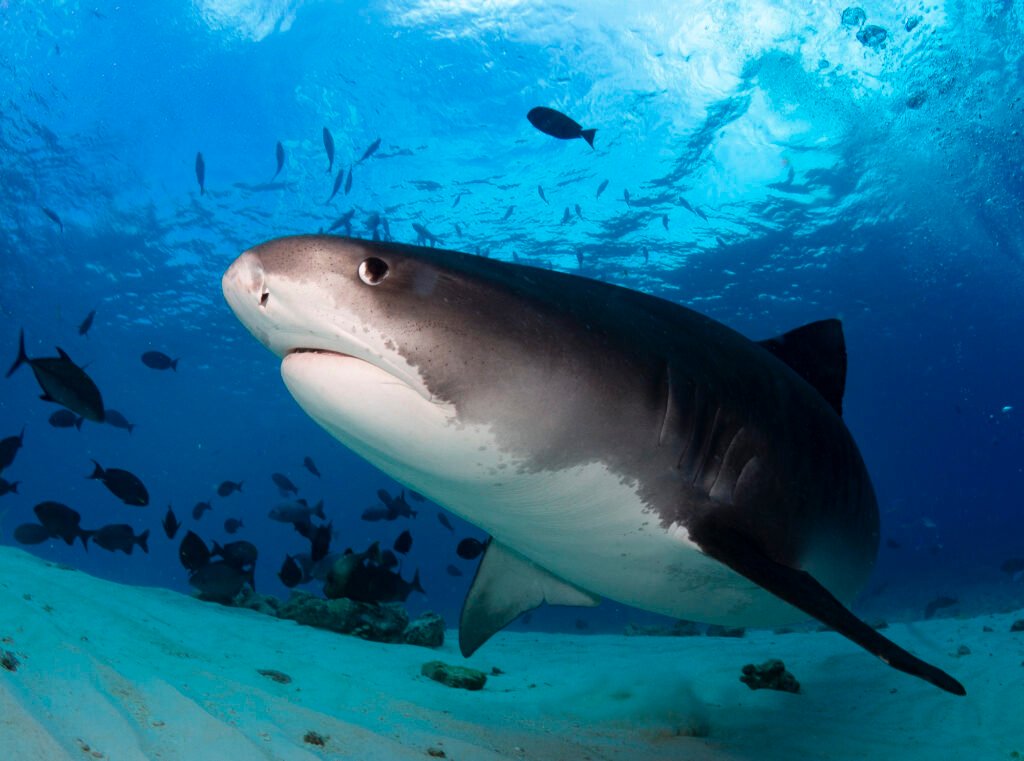
Tiger Harbour: The site that put Fuvahmulah on the global dive map. Resident tiger sharks are encountered here every single day of the year – the only dive site in the world where this is genuinely, consistently true. The local team briefs every group thoroughly on shark behaviour and conduct before entering the water.

Oceanic Manta Rays: Fuvahmulah accounts for roughly 90% of all black oceanic manta sightings in the Maldives. Black oceanic mantas (Manta birostris) are larger and more elusive than the reef mantas common elsewhere in the Maldives. April falls right in the peak window (March to May). Encounters happen in the blue water off the outer reef.

Thresher Sharks: Fuvahmulah has multiple cleaning stations visited by thresher sharks – normally a deep-water species that’s hard to encounter anywhere. When conditions are right they come up to cleaning stations at 12 to 15 metres. Present year-round with peak sightings generally later in the year, but April encounters are well-documented.

Scalloped Hammerheads: April is the tail end of the hammerhead season (October to April). Schools of scalloped hammerheads have been recorded at Farikede. No guarantees, but a real possibility on this trip.
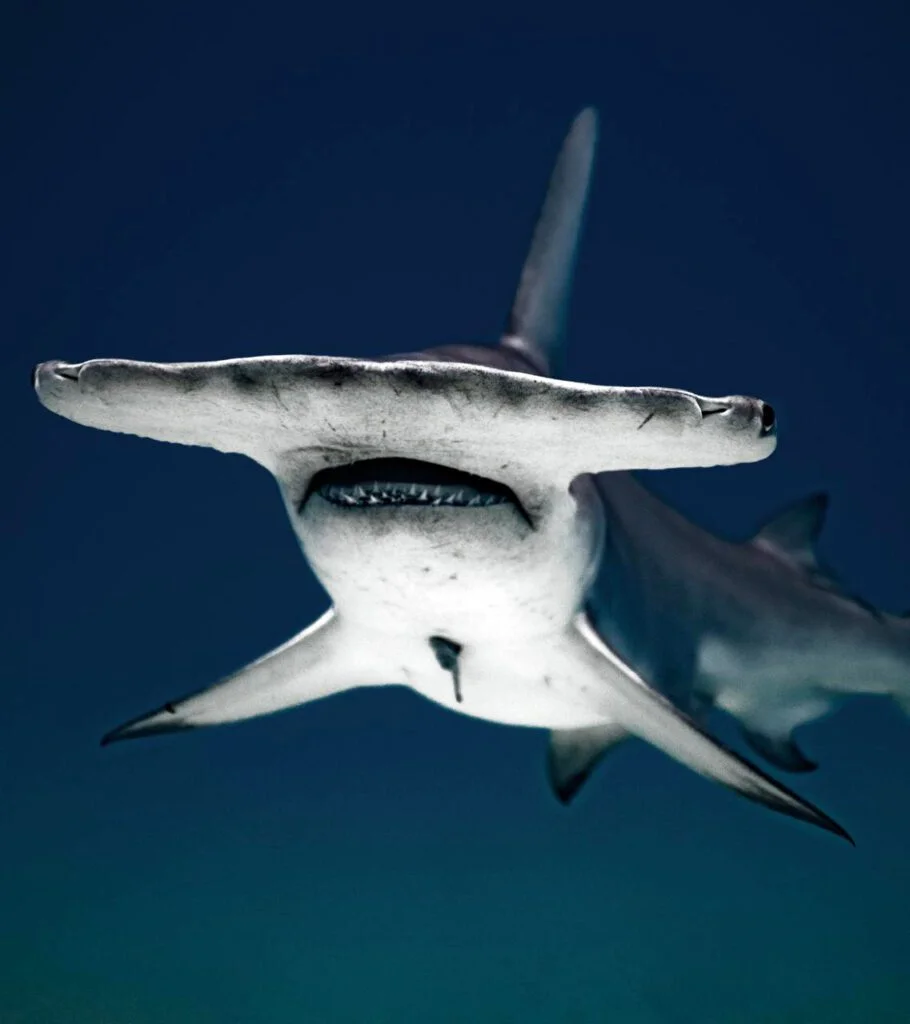
Whale Sharks: January to May is the peak window for whale sharks at Fuvahmulah. April sits right in the middle of that window. Not guaranteed, but probability is as high as it gets here.

Conditions in April: April is a generally good month at Fuvahmulah – the tail end of the northeast monsoon, before the southwest monsoon builds. Water temperature 28 to 30°C, 3mm wetsuit standard. Fuvahmulah is an isolated oceanic island with no protective atoll structure, so surface conditions can occasionally be choppier than Addu. Underwater visibility in the blue water is usually excellent – often 20 to 40 metres.
Accommodation & Meals
Both stays are at comfortable, well-kept guesthouses on inhabited local islands – clean, spacious rooms with reliable air conditioning, hot water, and good Wi-Fi. This is genuinely comfortable accommodation by any standard, and excellent value.
Addu Atoll: Guesthouse in Maradhoo, one of the islands on Addu’s 14 km causeway. The causeway connects Gan, Feydhoo, Maradhoo, and Hithadhoo by road – you can drive or cycle between them, which is entirely unlike anywhere else in the Maldives.
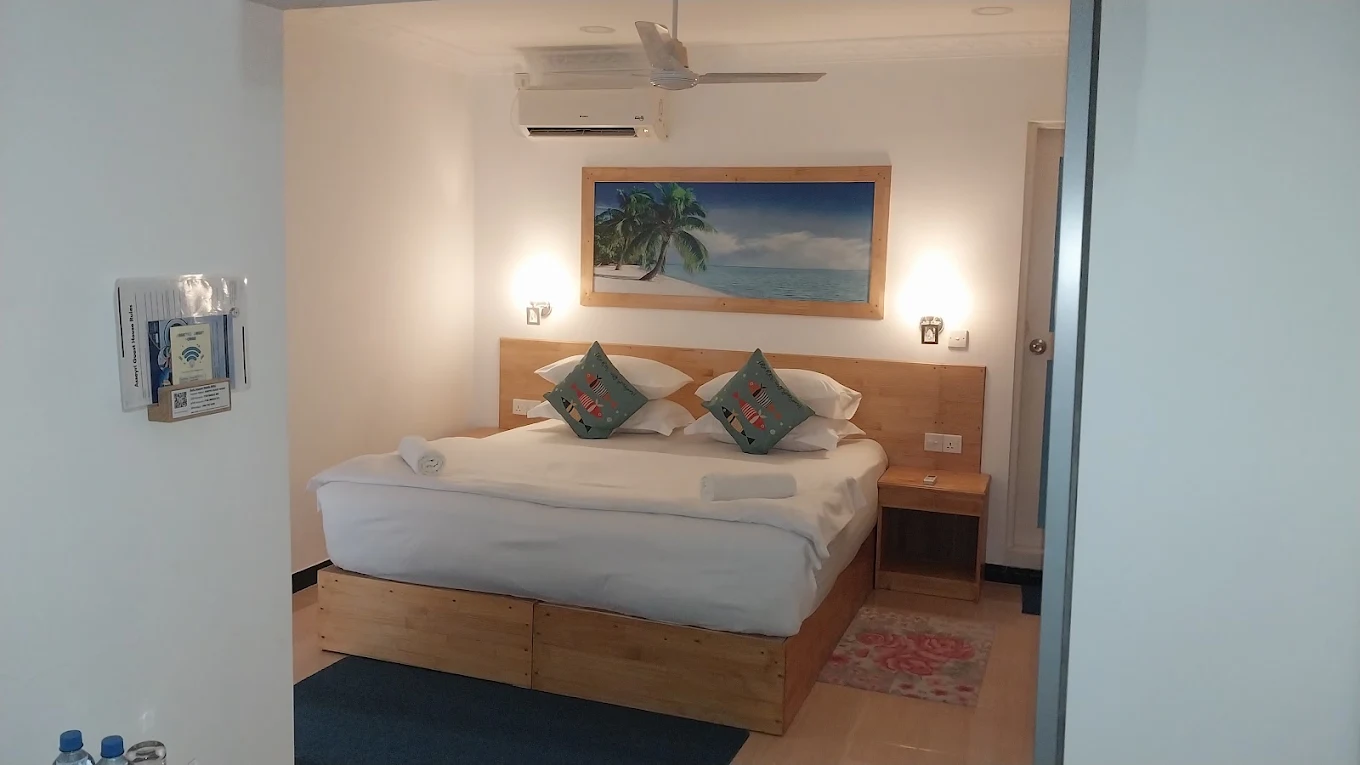
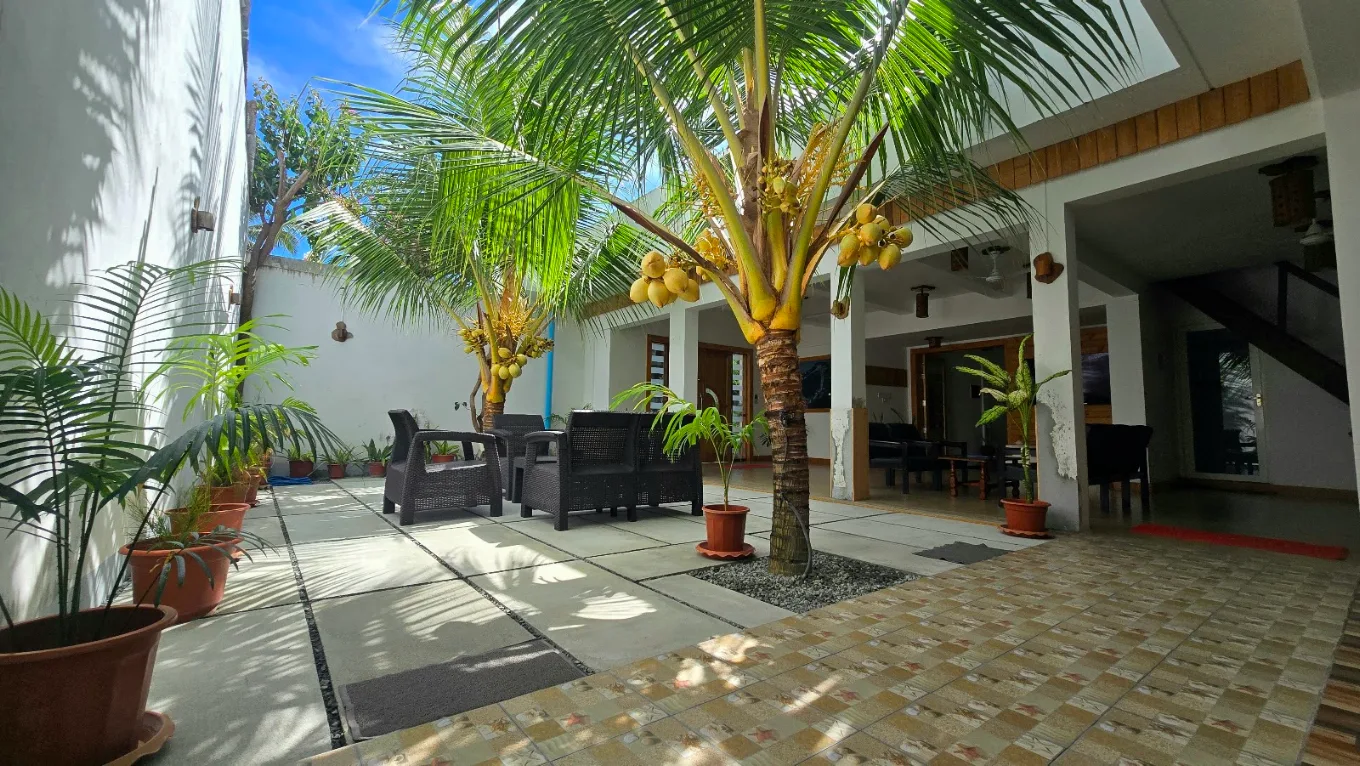
Fuvahmulah: Guesthouse in Fuvahmulah, close to the dive centre and the harbour. Fuvahmulah is a single large island – unusual in the Maldives – with two freshwater lakes and a town centre worth wandering.

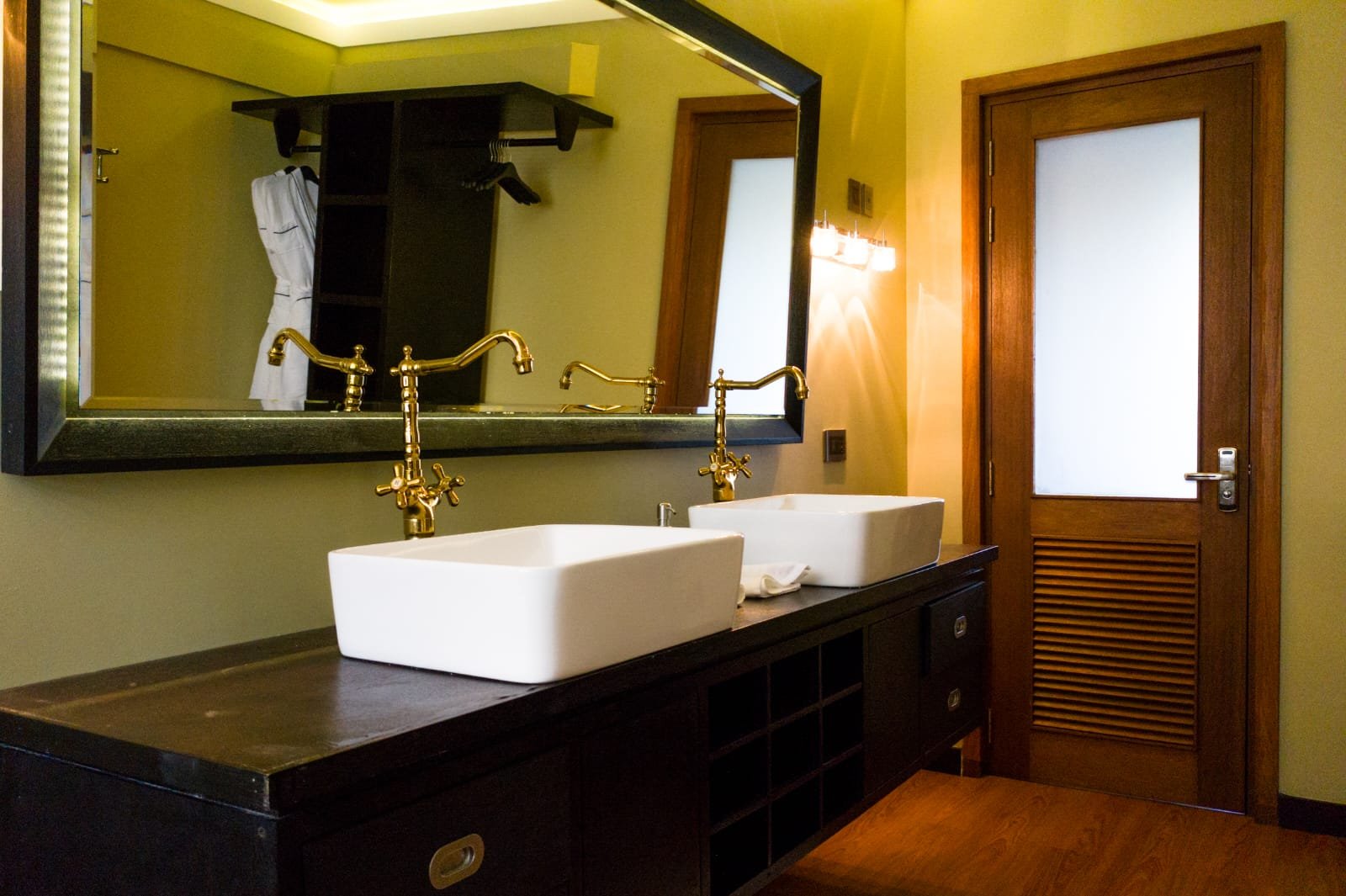
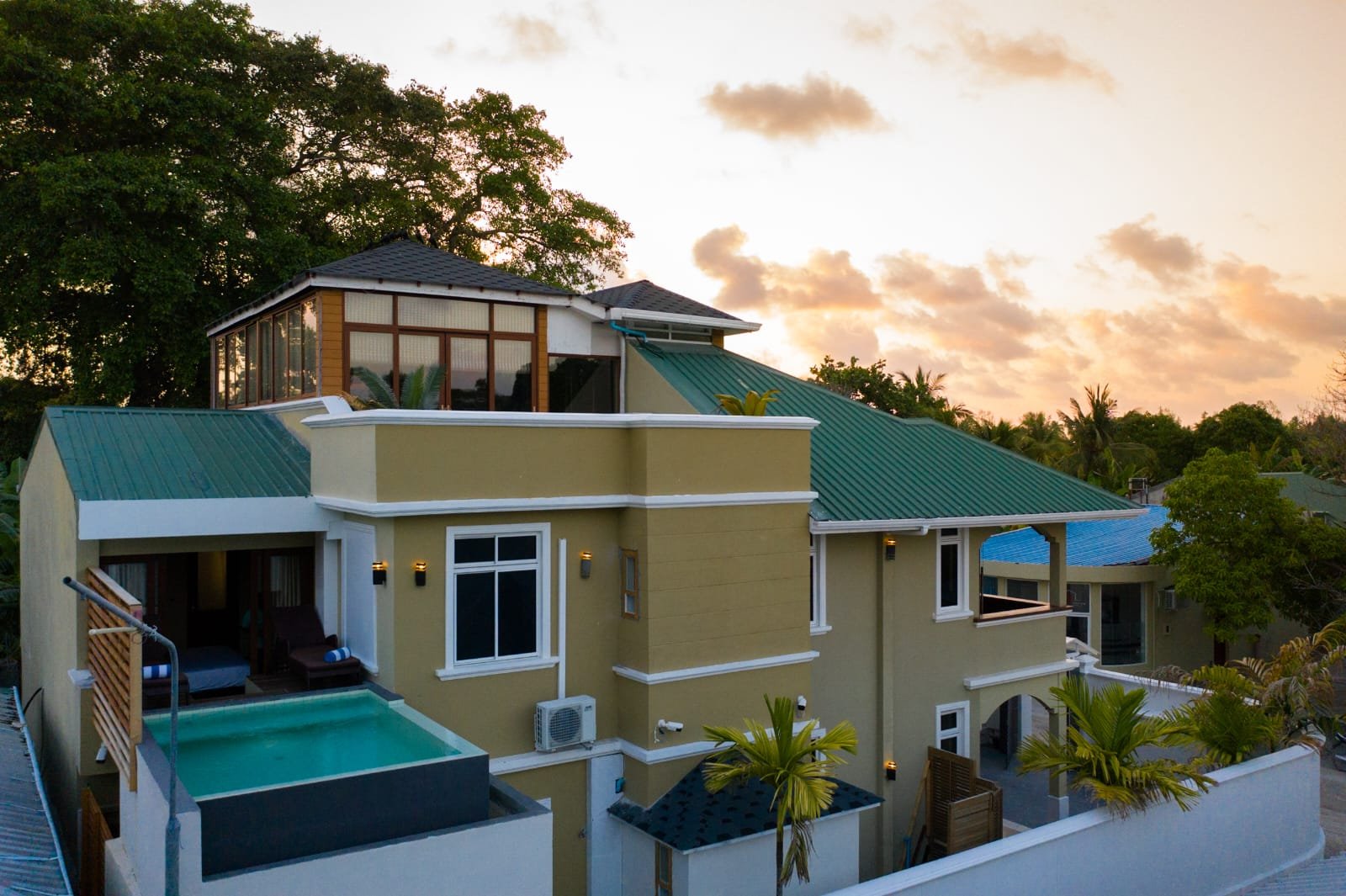
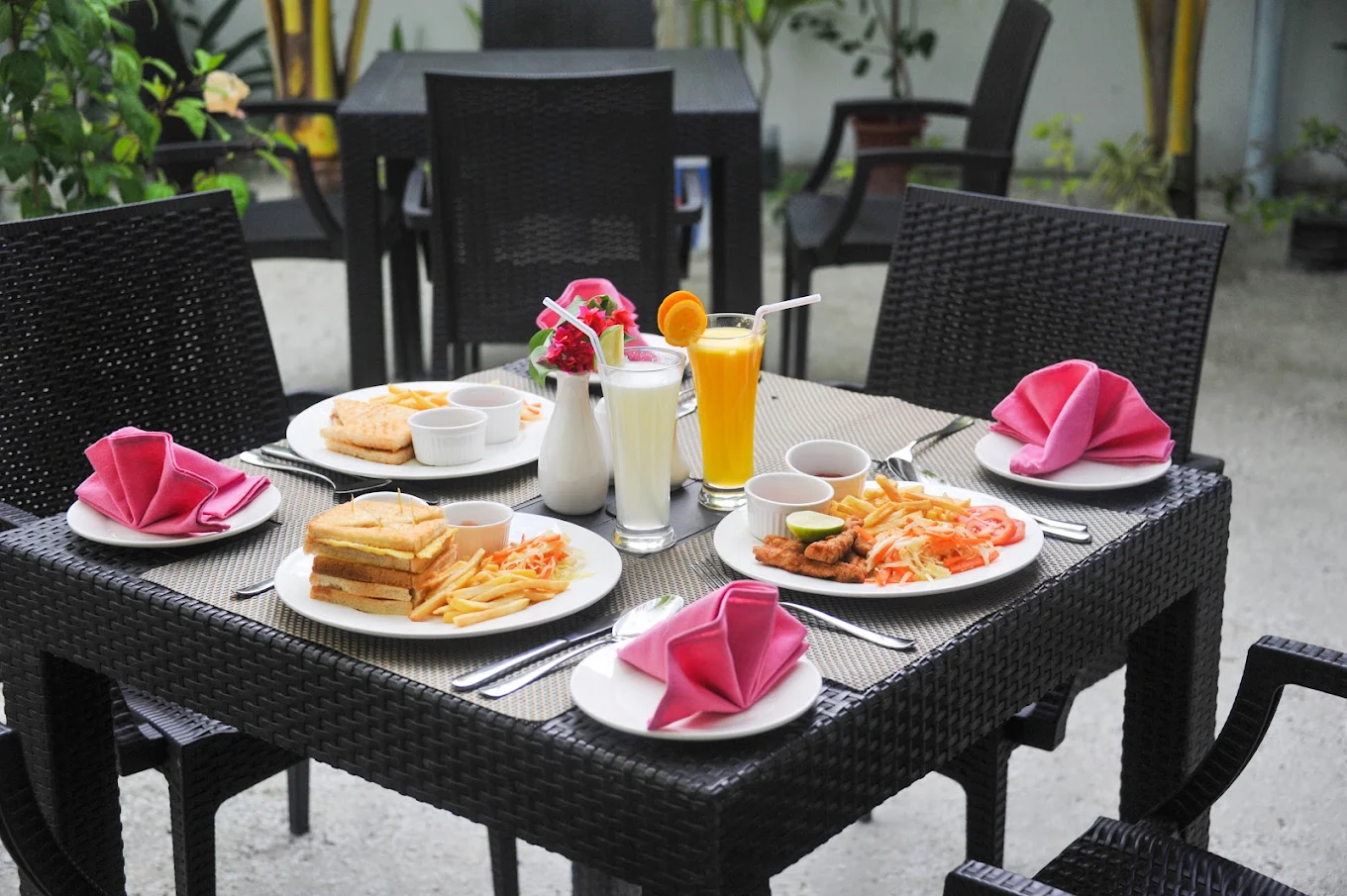
Meals: Breakfast is included at both guesthouses. For lunch and dinner you’re free to choose from local restaurants at both locations. Both islands have a good selection – fresh fish, rice, and noodle dishes are the staples. Budget approximately USD 8-12 per meal with beverage at a mid range restaurant.